Does Balmorex Work? An Evidence Review
The useful question is not whether individual ingredients have studies. It is how closely those studies match the current Balmorex Pro formula, route, dose and intended use.
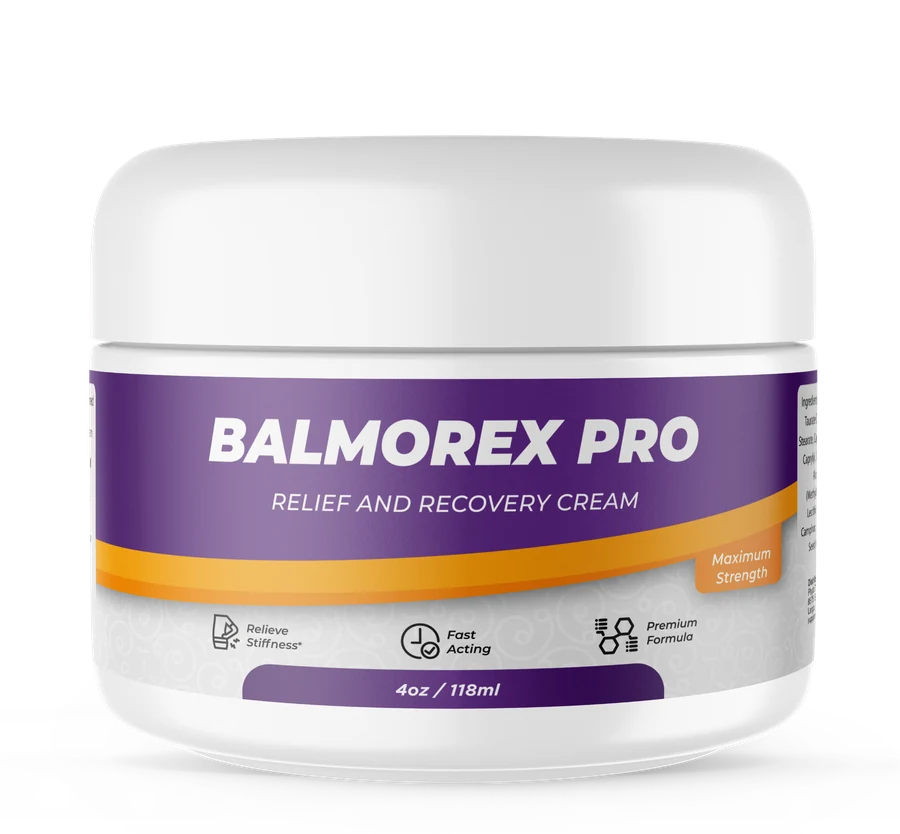
Product shown for identification. The evidence review below evaluates how closely available research matches the finished formula.
Our evidence-distance framework
Current Balmorex Pro formula, route, dosing and target population. None identified.
Similar complete product with comparable composition and concentrations. Not established.
Examples include research on topical arnica and a small topical ginger intervention.
Much of the MSM and Boswellia evidence is oral, not topical.
Useful for understanding marketing and consumer interest, not for proving efficacy.
What the individual studies actually tell us
Topical arnica
A 2007 randomized double-blind study included 204 participants with hand osteoarthritis and compared a specific arnica gel with ibuprofen gel for 21 days [source]. The authors reported no difference between groups in pain and hand-function improvements. This is relevant because it is human, topical and randomized—but it is still a different arnica preparation, not Balmorex Pro.
MSM
Randomized trials have evaluated oral MSM in people with knee osteoarthritis or mild knee pain [source]. Some reported improvements in symptom or quality-of-life measures. Those findings do not answer the key Balmorex questions: how much MSM is present, how much crosses the skin from this cream, and whether once-daily topical exposure reaches a clinically meaningful dose.
Boswellia serrata
Several randomized trials have tested standardized oral Boswellia extracts in knee osteoarthritis [source]. Some show favorable symptom/function outcomes. Again, route and formulation matter: a standardized oral extract is not equivalent to an unspecified amount of Boswellia extract in a topical multi-ingredient cream.
Topical ginger
A small study involving 20 adults compared topical ginger compresses with patches and observed symptom changes [source]. The intervention, size and design are too different from Balmorex Pro to support a product-specific conclusion, but the study does provide some topical-route context for ginger.
Menthol and camphor: a regulatory nuance
The current Balmorex label lists menthol and camphor. FDA's OTC external-analgesic monograph specifies concentration ranges for certain active ingredients and uses. The Balmorex label image we reviewed does not state menthol or camphor percentages and is not presented in a standard Drug Facts format. Therefore, this site does not classify Balmorex as an FDA-approved drug, an OTC monograph drug, or a product that conforms to M017.
How strong is the Balmorex evidence overall?
Product-specific certainty
No exact finished-product randomized trial identified.
Ingredient plausibility
Some human trials exist for several ingredients, but route/formulation differences are substantial.
Topical dose equivalence
Ingredient concentrations and skin-delivery data are not disclosed on the label reviewed.
What evidence would materially change this review?
- A preregistered, adequately powered randomized controlled trial of the current Balmorex Pro formula.
- Clear disclosure of ingredient concentrations and batch/formula consistency.
- A topical absorption or pharmacokinetic study using the marketed formulation.
- Independent replication rather than only vendor-funded or seller-controlled evidence.
- Transparent adverse-event reporting and a published safety dataset.
Evidence review FAQs
Can ingredient studies prove the full Balmorex product works?
No. They can support biological plausibility or ingredient-level interest, but they do not establish the efficacy of a multi-ingredient finished product unless the formulation, route, dose and tested population are sufficiently comparable.
Did you find an exact Balmorex Pro randomized trial?
No exact finished-product randomized controlled trial was identified in the searches used for this review.
Does the presence of menthol and camphor make Balmorex FDA approved?
No. FDA approval cannot be inferred from ingredients or facility registration. The current label also does not disclose the percentages needed to evaluate monograph concentration conditions.